
Table of Contents
- Milcor vs Bilco Roof Hatch: Feature Comparison
- Material Durability: Aluminum vs Steel Roof Hatches
- Thermally Broken Roof Hatch Benefits for Energy Efficiency
- OSHA Roof Hatch Regulations and Safety Compliance
- Installation Procedures and Curb Mounting
- Maintenance Requirements and Long-Term Durability
- Which Hatch Should You Choose for Your Project
- Frequently Asked Questions
Last Updated: August 31, 2026
Milcor vs Bilco Roof Hatch: Feature Comparison
When choosing between Milcor and Bilco roof hatches, you're evaluating two of the most trusted names in commercial roof access solutions. The milcor vs bilco roof hatch decision comes down to specific performance characteristics, installation requirements, and long-term operational costs. Both manufacturers deliver dependable products, but they approach design and functionality differently in ways that matter for your project timeline and budget.
Milcor emphasizes unobstructed clear opening design with the torsion bar mounted out of the way, while Bilco prioritizes one-hand operation that keeps users anchored to the ladder throughout opening and closing. These aren't minor details, they directly affect safety workflows, maintenance access, and how quickly your team can perform roof inspections or HVAC service calls.
Victory Construction Products stocks both brands with same-day shipping on most in-stock orders, eliminating the delays that typically plague commercial projects. Whether you need a Milcor model for maximum opening clearance or a Bilco unit for superior ergonomic control, you can have either delivered to your facility.

The core difference between these platforms is philosophy. Milcor designs for maximum usable space inside the hatch opening, critical when you're moving equipment or conducting regular maintenance. Bilco designs for maximum user control and safety during the operation itself. Your choice depends on whether your priority is access efficiency or operational safety during transitions.
Material Durability: Aluminum vs Steel Roof Hatches
The material you select determines how your roof hatch performs over decades of weather exposure and temperature cycling. Milcor and Bilco both offer aluminum and galvanized steel options, but the performance characteristics diverge significantly based on your building environment and maintenance capacity.
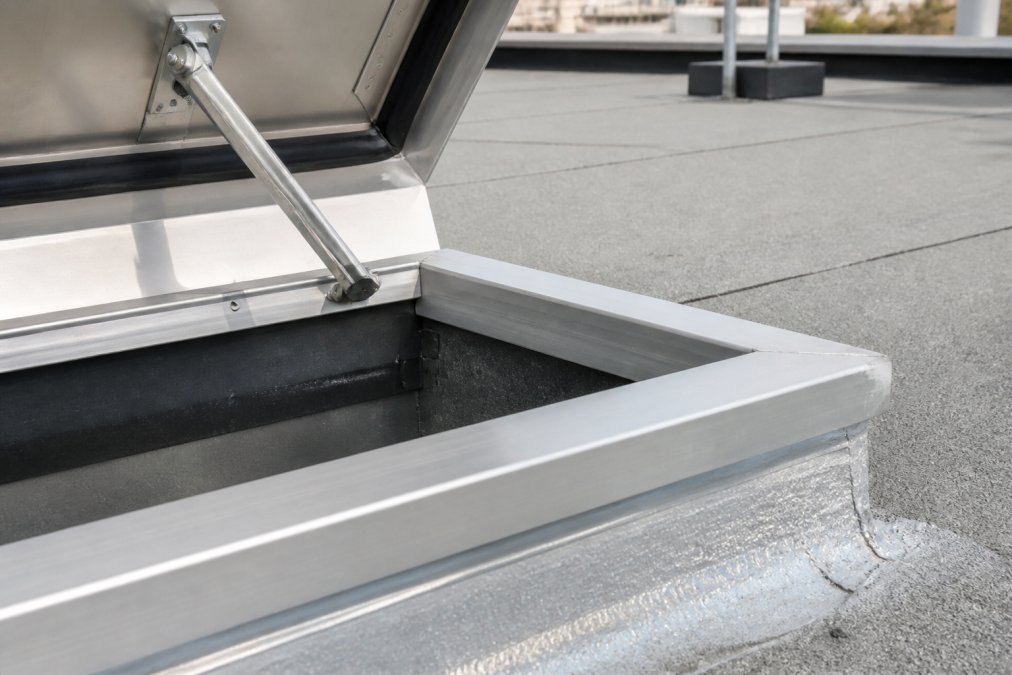
Galvanized steel provides superior load capacity and structural rigidity, making it the standard choice for high-traffic commercial facilities and industrial applications. The zinc coating resists corrosion effectively in most climates, though coastal environments and areas with aggressive salt exposure demand more frequent inspection. Steel hatches from both manufacturers typically handle higher foot traffic and equipment loads without flexing or showing wear in the hinge assembly.
Aluminum construction offers distinct advantages in lightweight applications and corrosion-prone settings. Aluminum doesn't rust in the traditional sense, it forms a protective oxide layer that actually strengthens over time. This makes aluminum superior for coastal properties, chemical processing facilities, and wastewater treatment plants where salt spray or acidic atmospheres accelerate steel degradation. The trade-off is lower load capacity and slightly less rigidity in the frame structure.
Both Milcor and Bilco apply heavy, closed-cell rubber gaskets to create weather barriers that prevent drafts and water penetration. These gaskets compress over time with thermal cycling, so inspection every 2-3 years ensures your building envelope maintains integrity. The material choice affects gasket performance too, aluminum conducts heat differently than steel, which can influence condensation patterns and gasket compression rates in extreme temperature swings.
For most commercial applications, galvanized steel delivers the best balance of durability and cost-effectiveness. Aluminum makes sense when corrosion resistance outweighs load capacity concerns. Your choice between the milcor vs bilco roof hatch in terms of material should align with your specific environmental conditions and maintenance budget.
Thermally Broken Roof Hatch Benefits for Energy Efficiency
A thermally broken roof hatch eliminates the direct metal-to-metal connection between interior and exterior frames, dramatically reducing heat transfer through the hatch assembly. This design feature has become standard in energy-conscious commercial construction, particularly for facilities with climate-controlled spaces where HVAC efficiency directly impacts operating costs.
The thermal break, typically a polyurethane or nylon insert, interrupts the conductive pathway that would otherwise allow cold exterior air to conduct directly into your building during winter, or hot exterior air to conduct inward during summer. The result is measurable reduction in heating and cooling load, which compounds across thousands of operating hours annually.
Bilco's thermally broken models incorporate the break into both the frame and cover assembly, creating a comprehensive thermal barrier. Milcor's approach focuses the break on the frame connection points while maintaining aluminum or steel cover construction. Both approaches work effectively, but the comprehensive design in Bilco units provides marginally better performance in extreme climates.
The energy efficiency benefit becomes particularly significant in northern climates where heating costs dominate annual HVAC expenses. A facility with multiple roof hatches can see measurable reduction in heating demand simply by specifying thermally broken units. The R-value improvement ranges from R-2 to R-4 depending on the specific model and insulation configuration, modest compared to modern wall assemblies, but meaningful for a single penetration point (peer-reviewed research).
Installation complexity doesn't increase with thermally broken designs. Both manufacturers deliver these units with the thermal break pre-installed, requiring no additional field work. The cost premium over standard models typically ranges from 10-15%, easily justified by energy savings over a 20-30 year service life.
OSHA Roof Hatch Regulations and Safety Compliance
OSHA regulations governing roof access don't specifically mandate roof hatch design standards, but they establish clear requirements for fall protection and safe access that directly influence hatch selection. The General Duty Clause requires employers to maintain safe working conditions, which includes providing secure access to roofs and elevated work areas.
According to OSHA guidelines on fall protection and roof access, any roof opening larger than 6 inches requires proper guarding or fall protection systems. Your roof hatch installation must accommodate safe entry and exit without creating trip hazards or unguarded edges. Both Milcor and Bilco designs meet these baseline requirements, but they achieve compliance differently.
Bilco's one-hand operation design directly supports OSHA compliance by ensuring workers maintain one hand on the ladder throughout the opening process. This design principle reduces fall risk during the most dangerous moment, transitioning from ladder to roof. The automatic hold-open arm holds the hatch in place, preventing accidental closure that could trap a worker or create a sudden weight shift.
Milcor's unobstructed opening design supports compliance by eliminating obstacles that might cause trips or falls once a worker reaches the roof level. The narrow hold-open arm at one corner minimizes interference with equipment movement and personnel traffic patterns on the roof surface.
Building codes reference OSHA standards and may impose additional requirements based on local jurisdiction. Many municipalities require fall protection systems, safety railings, or specific hatch specifications for commercial buildings. Your local building department can clarify exact requirements, but the baseline expectation is that your hatch installation allows safe, controlled access without creating new hazards.
Installation Procedures and Curb Mounting
Proper installation determines whether your roof hatch performs as designed for the next 20 years or becomes a chronic maintenance problem within months. Both Milcor and Bilco units mount to a curb assembly that sits on the roof deck, creating a raised frame that accommodates flashing and weather stripping.

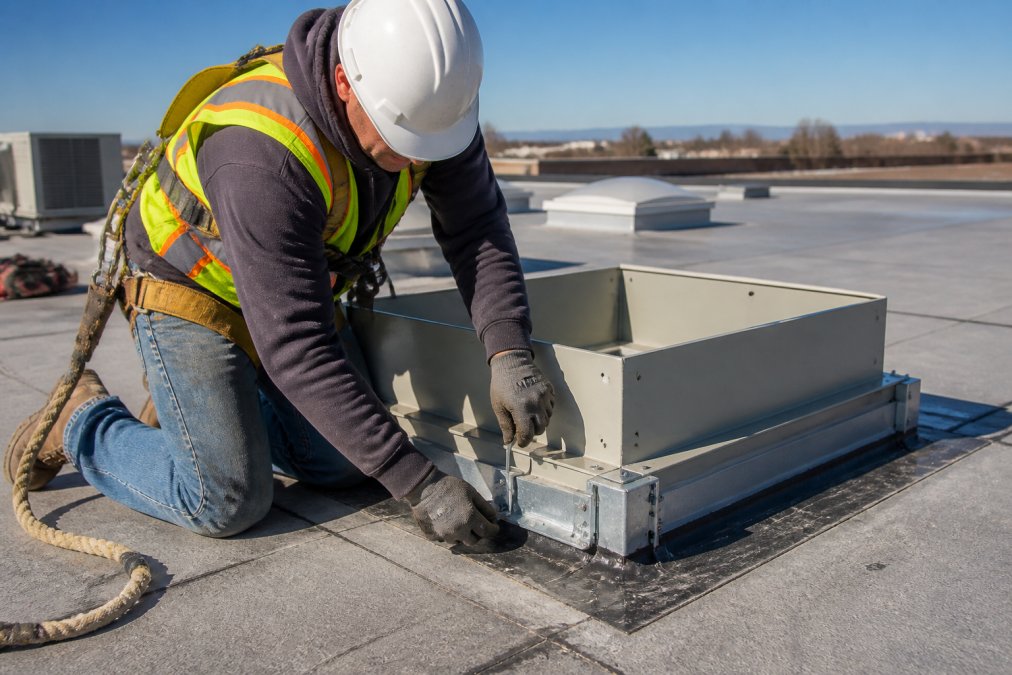
The curb construction creates the foundation for weather sealing and structural integrity. A properly constructed curb prevents water from running under the flashing and into your building envelope. Both manufacturers provide detailed installation documentation that specifies fastener spacing, sealant application, and flashing overlap requirements.
Curb mounting typically involves securing the frame to the roof structure with bolts or lag screws spaced every 12-16 inches around the perimeter. The spacing prevents stress concentration and ensures the curb distributes load evenly across the roof deck. Under-fastening creates flex points where the curb can shift during wind events, compromising the weather seal and accelerating gasket failure.
Flashing integration represents the critical detail that separates successful installations from leak-prone ones. The flashing must overlap the roof covering material by at least 4-6 inches, with proper slope to direct water away from the hatch opening (fema.gov). Common installation mistakes include insufficient flashing overlap, reversed flashing direction, or failure to seal the flashing-to-roof interface with appropriate sealant.
Both Milcor and Bilco provide curb mounting hardware and flashing with their units, but installation quality depends on contractor expertise. Victory Construction Products can provide detailed submittals and installation guides that clarify exact procedures for your specific roof assembly. Proper installation takes 2-4 hours depending on roof conditions and crew experience, but rushing this phase creates leaks that cost thousands to remediate later.
Maintenance Requirements and Long-Term Durability
Roof hatches require minimal maintenance compared to other roof penetrations, but consistent attention prevents premature failure and extends service life to 25-30 years. The primary maintenance task involves inspecting and cleaning the gasket seal annually, particularly after severe weather events.
Gasket inspection should focus on compression set, the permanent deformation that occurs as rubber ages and loses elasticity. A properly functioning gasket compresses when the hatch closes and returns to original thickness when released. If the gasket no longer springs back after closure, it has lost sealing capability and replacement is due. Replacement gaskets for both Milcor and Bilco units are readily available and cost significantly less than full hatch replacement.
Weather stripping degradation accelerates in climates with extreme temperature swings, UV exposure, or salt air. Inspect for cracks, hardening, or separation from the frame. Early replacement prevents water infiltration that can damage insulation and create mold growth inside the building envelope.
The hinge assembly and spring mechanism require occasional lubrication to prevent binding and ensure smooth operation. A light machine oil applied annually to hinge pins and spring attachment points maintains functionality. Avoid heavy grease that attracts dust and creates buildup that impedes movement.
Fastener inspection catches corrosion before it compromises structural integrity. Galvanized fasteners typically outlast the roof covering itself, but coastal environments and chemical exposures can accelerate corrosion. Replacement fasteners should match the original specification, upgrading to stainless steel in aggressive environments provides long-term durability at modest cost.
Both Milcor and Bilco units respond well to preventative maintenance programs. Facilities that inspect hatches annually and address minor issues immediately typically see 25+ year service life. Deferred maintenance, ignoring gasket degradation, ignoring rust spots, ignoring hinge binding, compresses service life to 12-15 years and creates emergency replacement situations that disrupt operations and inflate costs.
Which Hatch Should You Choose for Your Project
Your decision between Milcor and Bilco depends on three primary factors: access requirements, safety priorities, and environmental conditions. Neither choice is objectively superior, each excels in specific applications.
Choose Milcor when maximum opening clearance is essential. The unobstructed design accommodates large equipment moves, HVAC unit replacement, or frequent maintenance access. Facilities with active roof operations benefit from the clear opening that eliminates obstacles and speeds workflow. The narrow hold-open arm minimizes interference with roof traffic patterns.
Choose Bilco when user safety during operation is the priority. The one-hand operation design keeps workers anchored to the ladder, reducing fall risk during the transition from ladder to roof. The automatic hold-open arm prevents accidental closure and provides positive locking that workers can rely on. This design excels in high-traffic facilities where multiple personnel access the roof regularly.
Environmental conditions should influence material selection within your chosen brand. Galvanized steel provides superior durability in most climates and handles higher load capacity. Aluminum makes sense for coastal properties, chemical processing facilities, or areas where corrosion resistance outweighs load capacity concerns. Thermally broken models justify their cost premium in northern climates where heating efficiency impacts annual operating budgets.
Installation expertise matters more than brand choice. A properly installed Milcor unit outperforms a poorly installed Bilco system. Verify that your contractor has experience with roof hatch installation and understands proper curb construction, flashing integration, and gasket sealing. Victory Construction Products provides detailed submittals and installation documentation that contractors can reference during the project.
Consider total cost of ownership rather than initial purchase price. A slightly more expensive unit with superior durability and lower maintenance requirements delivers better value over 20+ years of operation. Factor in maintenance labor, gasket replacement, and potential emergency repairs when comparing options.
When you're ready to specify your roof hatch, Victory Construction Products has both Milcor and Bilco units in stock with same-day shipping available. We provide complete submittals, installation documentation, and technical support to ensure your project stays on schedule. Our team can help you select the right model for your specific application, whether you prioritize maximum opening clearance or superior safety features. Bilco Roof Hatch and Milcor Roof Hatch are available now with our lowest-price guarantee backing every order.
Frequently Asked Questions
What are the primary material differences between Milcor and Bilco roof hatches?
Milcor hatches are available in galvanized steel and aluminum options, with heavy closed-cell rubber gaskets factory-applied for weather protection. Bilco offers galvanized steel, aluminum, or stainless steel construction. Both use durable latching mechanisms and torsion springs, but Bilco's one-hand operation is designed to keep one hand free on the ladder for safety. Choose aluminum vs steel based on your building's exposure to salt spray or corrosive environments, aluminum resists corrosion better in coastal areas.
How do Milcor and Bilco roof hatches compare in thermal performance?
Thermally broken roof hatch designs reduce heat transfer through the frame, improving overall building envelope performance. Both Milcor and Bilco offer models with thermal breaks and insulation values measured in R-value. Milcor emphasizes its weather stripping and gasket seals to minimize drafts, while Bilco's thermal break construction is engineered to meet modern energy codes. For buildings requiring higher insulation values, specify models with thermally broken frames.
What OSHA requirements apply to roof hatches in commercial buildings?
OSHA regulations require roof access points to include fall protection systems and proper safety railings. Roof hatches must have latching mechanisms that hold them securely closed, preventing accidental opening. Both Milcor and Bilco hatches include compression springs, torsion bars, and hold-open arms that meet OSHA standards. Your hatch must also have a clear opening that accommodates ladder access safely and comply with your building's fire rating requirements. Always verify that your selected model meets local building codes and OSHA 1910.23 standards for walking-working surfaces.
Are Milcor and Bilco roof hatch sizes interchangeable for replacement projects?
Standard roof hatch sizes (24×30, 30×36, 36×48) are similar across manufacturers, but curb dimensions and mounting details vary. Before ordering a replacement hatch, measure your existing curb construction and verify the clear opening dimensions. Milcor and Bilco both offer custom sizes for non-standard applications, but these require longer lead times. For existing curb installations, confirm that the new hatch's flashing and gasket seal align with your current roof membrane, incompatible curb heights can compromise the building envelope and create water infiltration risks.
This article was written using GrandRanker